Vividstorm S Pro P vs AWOL Vision Cinematic+ Floor-Rising Screen
Compare the Vividstorm S Pro P and AWOL Vision Cinematic+ acoustic floor-rising UST ALR screens by gain, size range, viewing angle, acoustic design and automation.
Both target premium living-room UST systems and both use an acoustically treated lower area rather than presenting the whole image surface as acoustically transparent. Size is the immediate separator: Vividstorm goes smaller; AWOL currently extends to 130″.
| Feature | Vividstorm S Pro P | Competitor |
|---|---|---|
| Format | Motorized tensioned floor-rising UST ALR/CLR | Motorized floor-rising UST ALR |
| Published gain | 0.6 | 0.6 for AWOL Cinematic material |
| Published viewing angle | 170° | 170° |
| Published sizes | 72–120″ at linked merchant | 100–130″ on current AWOL listing |
| Ambient-light claim | ALR/CLR; seller describes excellent ceiling-light rejection | 95% ceiling ambient-light rejection claim |
| Acoustic detail | 0.4 mm perforated lower black border | Sound-transparent holes in lower black area |
| Automation | RF / app / voice / trigger described on current Vividstorm listing | Projector sync described for AWOL laser-TV models |
What actually decides this comparison?
AWOL’s current Cinematic+ page publishes 95% ceiling ambient-light rejection, 170° viewing and a motorized floor-rising system. Its acoustic treatment is also concentrated in the lower black area, making this a genuine use-case comparison rather than a superficial brand matchup.
1. Room geometry before brand preference
Measure the full case, not just the diagonal image. The case must fit the cabinet or floor location, and the UST projector still needs its own throw distance and height relationship to the image. A screen can be technically “the right size” and still fail the room if the case or projector footprint collides with furniture.
2. Light direction matters more than an ALR percentage alone
UST lenticular surfaces are directional. Published ambient-light percentages are not always measured the same way across brands, so they are poor cross-brand scores unless the test method is identical. Use them as manufacturer claims, then prioritize independent measurements where available.
3. Acoustic design is not binary
The S Pro P specifies a perforated lower black border. That is different from a fully acoustically transparent image surface. If your center channel or soundbar sits behind the bottom border, the feature may be useful; if your speakers sit elsewhere, it may not matter.
Which buyer profile fits each screen?
Vividstorm S Pro P profile
- You want a UST-specific rising screen with 0.6 gain.
- You value smaller size steps down to 72″.
- You can use the perforated lower border for speaker placement.
- You want app/voice/trigger controls described in the current Vividstorm spec.
AWOL Vision Cinematic+ Floor-Rising Screen profile
Prioritize the competitor when its exact size, surface characteristics, control system, case dimensions or current delivered price suit your room better. Compare the exact SKU rather than assuming brand-family specs carry across every variant.
Our decision rule
Start with room fit, then screen surface, then automation, then delivered price. If the S Pro P fits those first three constraints, it becomes the product to price-check.
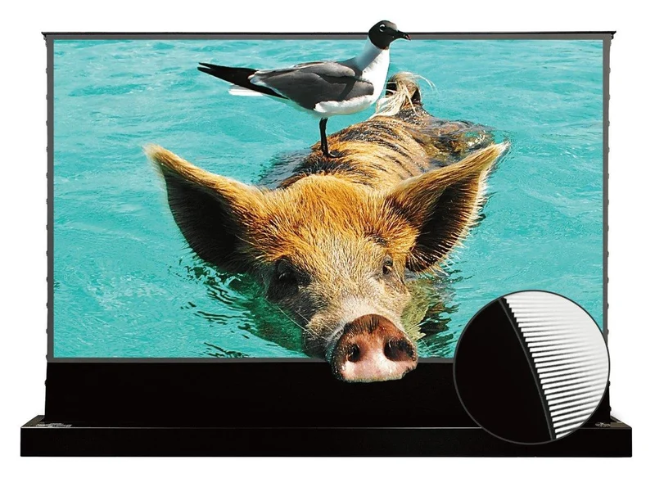
Vividstorm S Pro P
72–120″ options at the linked merchant; 0.6 gain, 170° published viewing angle, floor-rising motorized design and perforated lower border.